Summertime…and the living’s easy. This time of year is bursting with things to explore and things to do. Get creative and crafty, or enjoy the great outdoors before a chill in the air reappears. Regardless, the best adventures happen when you get curious about the world around you. Let’s go!
Summertime Microgreens Activities
Tie-Dye with Nature
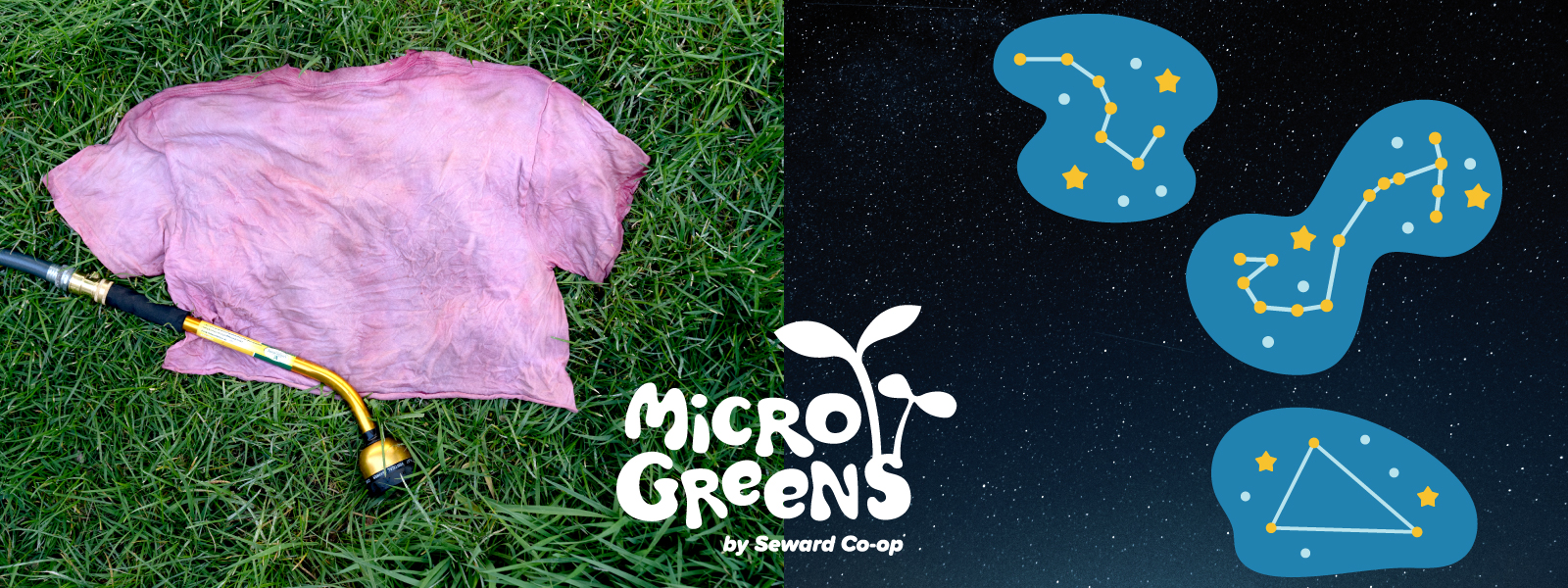
Turn your food scraps into a beautiful clothing dye! You can make natural tie-dyes using fruits, vegetables, and plants. For instance, beets make deep pinks and reds, turmeric produces a bright golden yellow, and blueberries create soft purples, amongst many other possibilities.
Here’s how to get started:
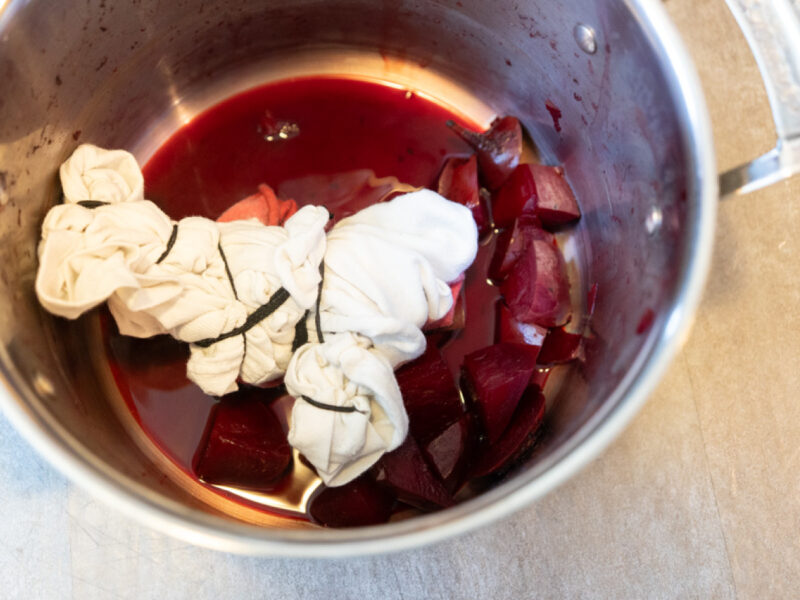
- Ask an adult to help you simmer your chosen plant material in water for 30–60 minutes until the water is deeply colored. Let it cool.
- While you’re preparing your dye, you can also prep your clothing with a pre-treatment to help the color last longer. Combine either ½ cup salt with eight cups water or equal parts vinegar and water in a saucepan, then add your fabric and simmer for one hour. After, run the fabric under cool water.
- Scrunch, twist, or fold a white cotton t-shirt or piece of fabric and secure it with rubber bands.
- Submerge the fabric in your natural dye bath and let it soak for several hours or overnight.
- Rinse, remove the rubber bands, and reveal your one-of-a-kind creation!
Every batch will turn out differently, but the variations are partially what makes it so fun. With natural dyes like these, the color will fade unless you do a pre-treatment, like the one described in step 2.
 Look at the Stars, Look How They Shine for You!
Some of the fondest memories of childhood include looking up at the stars on a warm summer evening. There’s not much better! Minnesota’s summer skies are full of bright stars (and sometimes even meteor showers).
A few tips for stargazing:
- Head somewhere away from city lights, if you can.
- Avoid lights for about 20 minutes to let your eyes adjust to the dark before you start looking.
- Try to spot the Big Dipper! It’s one of the easiest shapes to find and its front points you toward the North Star. It’s a great starting point for any stargazer. Once you find it, see if you can spot any other constellations.
- In mid-August, keep an eye out for the Perseid meteor shower. For Minnesota viewers, the best time to watch is after midnight Aug. 12–13, looking toward the northeast and as far from city lights as you can get. Head somewhere dark and see how many you can count!