
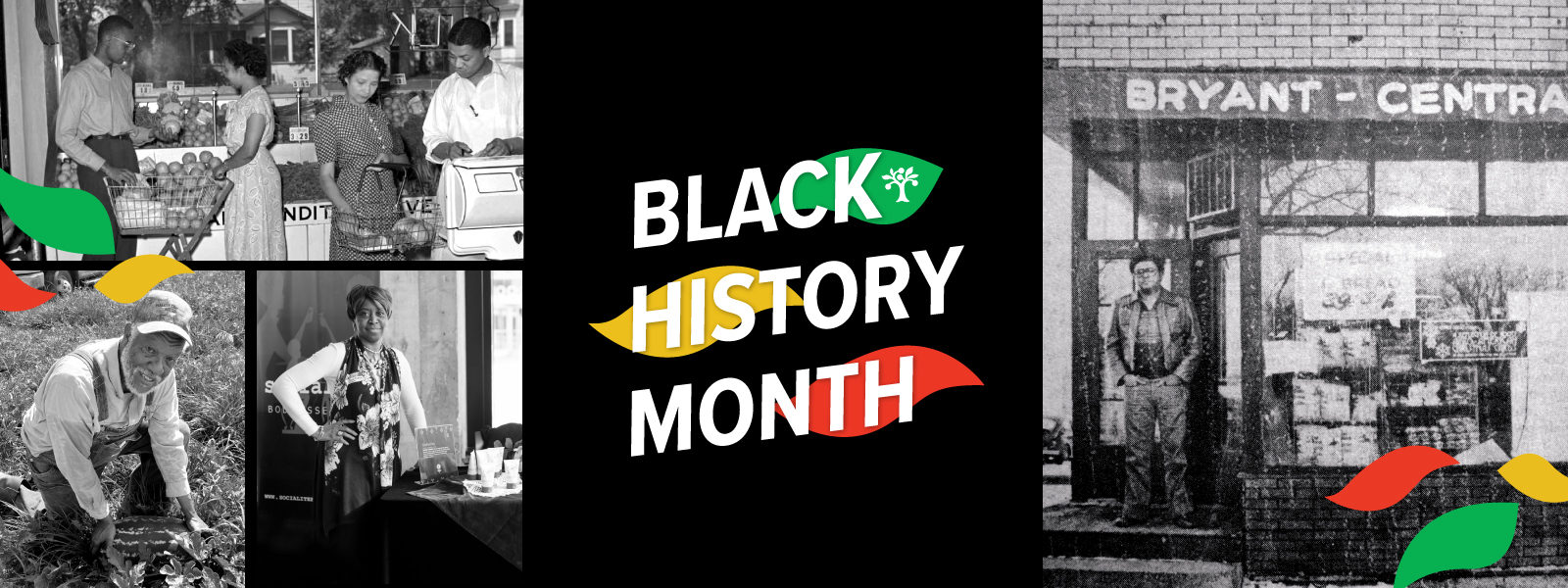
We’re honored to support Black- and African-American-owned businesses across our stores, from food producers to wellness vendors. While Black History Month is a noted time to celebrate inclusively-owned businesses, we are always committed to pursuing a food economy and community rooted in equity, inclusion, and socially and environmentally responsible practices. At Seward Co-op, our Ends Statement guides the decisions we make, and we are dedicated to the values it affirms year-round.
Honoring Black History Month 2023
Honoring Black Cooperation Throughout History and Today
Before capitalism became our society’s primary economic structure, cooperation–and cooperative economics–provided a framework for us to live and work together. Having shared ownership and a shared stake of outcomes allows people to come together to create change within communities. Throughout history, cooperative economics have provided opportunities for marginalized individuals to find pathways to equity.
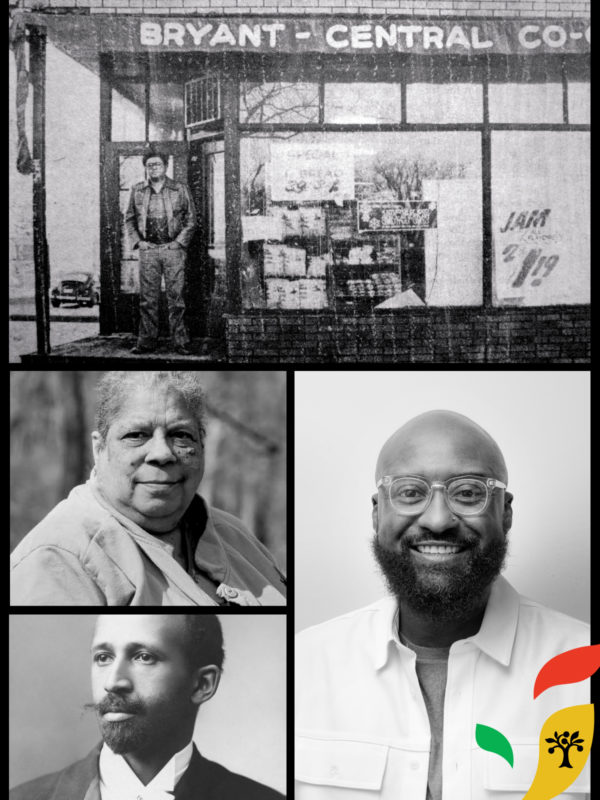 This Black History Month, we aim to uplift the contributions of early and present-day Black cooperators like W.E.B. Du Bois, who was a co-founder of the NAACP and founded the Negro Cooperative Guild in 1918. Considered one of the greatest thinkers of his time, he wrote about cooperative economics as road to equity for African Americans. Halena Wilson was a cooperative educator and worked to empower women within the cooperative movement in the middle of the century. She helped open buying clubs, credit unions, and consumer co-ops throughout the Chicago area. Locally, Moe Burton was the founder of the Bryant-Central Co-op. His work with the Black Panthers and Socialist Workers Party led him to cooperation as a tool for creating food access. The Bryant-Central Co-op created jobs and provided cost-effective food options in an area that previously lacked access. Annie Young’s legacy in the local co-op movement is far-reaching. Her early experience of starting a buying club to feed those she was living with in Sioux Falls, S. D. prepared her for the work she would ultimately do at the People’s Warehouse at the height of the Co-op Wars. Later, she filled the role of Membership Coordinator at Seward Co-op. Not only did she boost membership, but she also established the membership number system that’s in use in Seward Co-op stores today. Later, she served as the president of our board of directors.
Today, we are honored to welcome our first Black General Manager, Raynardo Williams, to the co-op. Ray has held many leadership roles at our co-op over the last seven years. He is dedicated to our Ends and has showcased his commitment to the co-op and exemplified his flexibility in times of difficult change and community unrest. This is also a monumental step for our co-op that exemplifies our ongoing commitment to diversity, equity, and inclusion within the cooperative movement. After a year of celebrating our 50th anniversary, we cannot diminish the historic nature of Ray stepping into his role as the first Black GM in Seward Co-op’s history. Together, Ray and Seward Co-op are making Black history and showing the world what modern cooperative leadership looks like.
Further Reading on Black Cooperative History
The Legacy of African Americans in Co-ops
Jessica Gordon Nembhard: Cooperative Economics and Civil Rights